


From Results to Impact: widerAdvance Facility Review Workshop Held in Athens

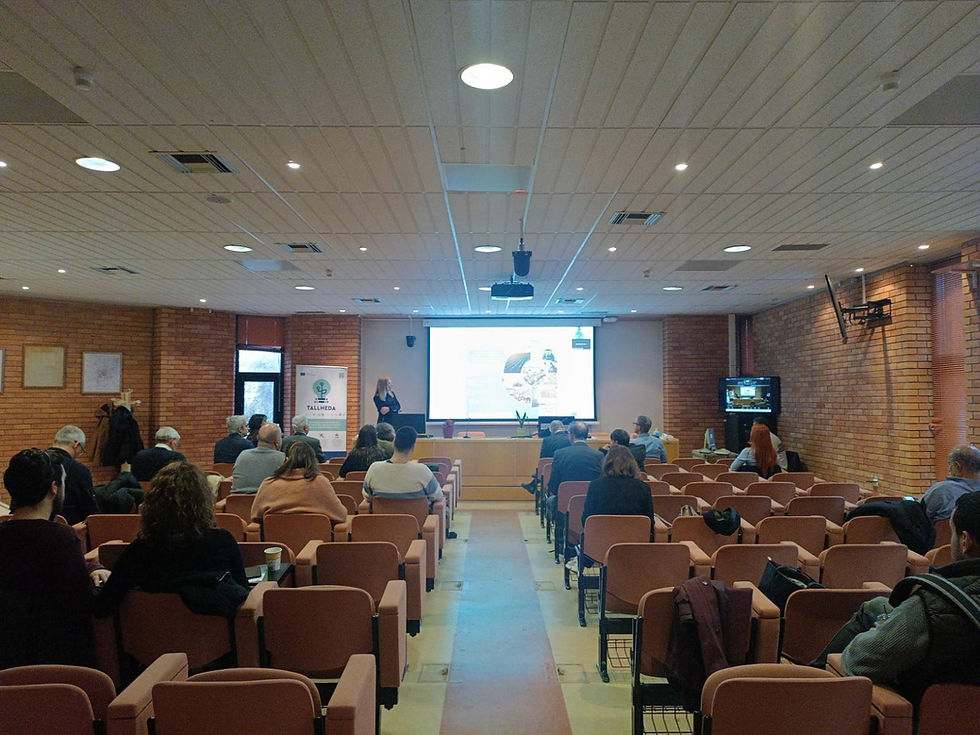
On Friday 2 October 2026, Athens hosted the widerAdvance Facility Review Workshop (DEA 8), a full-day, hands-on session on turning Horizon Europe research results into real-world impact.
The widerAdvance Facility is a 48-month Horizon Europe initiative that supports organisations from Widening Countries and Outermost Regions in maximising the impact of their research and innovation results. It offers tailored services in communication, dissemination, and exploitation, helping beneficiaries valorise the Key Exploitable Results (KERs) of Widening actions under Horizon 2020 and Horizon Europe. The Facility complements existing European Commission tools such as the Horizon Results Booster and the European IP Helpdesk.
A day structured around exploitation
The workshop was organised in two parts, moving from reviewing how results are positioned to planning how they will reach the market.
Morning: value proposition and strategy. After an introduction to the day, participants took part in an interactive group discussion on the Value Proposition Canvas (VPC) and reviewed the outputs together, closing the session with final recommendations. The second half of the morning introduced the two core tools of the exploitation strategy: the Characterisation Table and the Exploitation Roadmap.
Afternoon: learning by doing. After lunch, participants worked in groups to complete the Characterisation Table, followed by an open discussion on the results. A second group session then focused on building the Exploitation Roadmap, again followed by an open discussion and a closing wrap-up.
Two case studies, no single “correct” answer
Participants applied the tools to two fictional but realistic case studies from the cultural heritage domain, each with its own team, IP position, competitive landscape, cost estimates, and a deliberately open dilemma.
An interactive learning platform for cultural heritage education. Researchers have developed a platform combining Virtual Reality, Augmented Reality, and gamification to make heritage education more engaging and accessible. Groups had to decide on the best route to market: creating a spin-off company or selling and licensing the technology to third parties. The decision depended on the investment required, the team’s ambitions, and the plan for next steps.
“Heritage-Shield”, a policy framework for urban protection. A team of legal scholars and historians has designed a ready-to-adopt local ordinance that helps historic coastal cities protect “living heritage” such as traditional crafts and community life, not just buildings. Groups weighed a non-commercial public licence, a boutique consultancy or spin-off unit, licensing the package to consultancy firms, or a hybrid approach.
The brief was the same for both cases: choose a preferred exploitation pathway and build a strategy and plan that is coherent, feasible, and credible. Because some information was left out on purpose, participants had to make logical assumptions, as they would with a real KER whose market details are still unclear.
Why it matters
Under Horizon Europe, beneficiaries are legally required to enhance the impact of their results through dissemination and exploitation. In practice, many research teams struggle with the choices that follow: whether to found a spin-off, license the technology, or offer it as an open public resource. By working through concrete cases, participants practised exactly this kind of reasoning, and the Characterisation Table and Exploitation Roadmap give them a structured way to apply it to their own KERs.
The Athens workshop is part of the Facility’s wider effort to support knowledge valorisation in Widening countries and to reduce regional innovation disparities across the European Research Area.

Comments